Director: Jim Bruce
Run Time: 104 min.
Call Number: HG2563 .M665 2013
"The documentary is especially compelling when it explains how the
easy-money policies embraced by former Federal Reserve Chairman Alan
Greenspan sowed the seeds for the financial collapse of 2008. In his
early years as Fed chairman, Greenspan was admired as a monetary
superhero who had engineered remarkable gains in the stock market
through artificially low interest rates . . . Greenspan was brought before Congress after the dot com bubble
burst. Instead of renouncing the easy money policies that had injured
the economy, Greenspan displays apathy towards the stock market crash by
essentially saying our economy had a great run, the bust was not
terrible, so that wasn’t so bad … was it? Greenspan then blew a new
bubble with housing prices. Its collapse (in the fall of 2008) was far
more devastating . . . Perhaps the most compelling feature of this documentary is the exceptional coverage of the actions which led to the financial collapse
in 2008."
—Jon Decker, Forbes
Director: Sarah Polley
Run Time: 108 min.
Call Number: HQ503 .S76 2013
"Who owns a family’s stories? Do we shape our lore—the anecdotes of how
our parents met, the tales of sibling betrayals and truces—as a clan,
or do we agree on the outlines while parting ways on the particulars?
Is it possible to be anything but subjective when it comes to the
legends in our own homes? This is the endlessly complicated subject of
Sarah Polley’s 'Stories We Tell,' a documentary inquiry into her past
that ingeniously widens in scope until director and audience stand at
the edge of the abyss."
—Ty Burr, Boston Globe
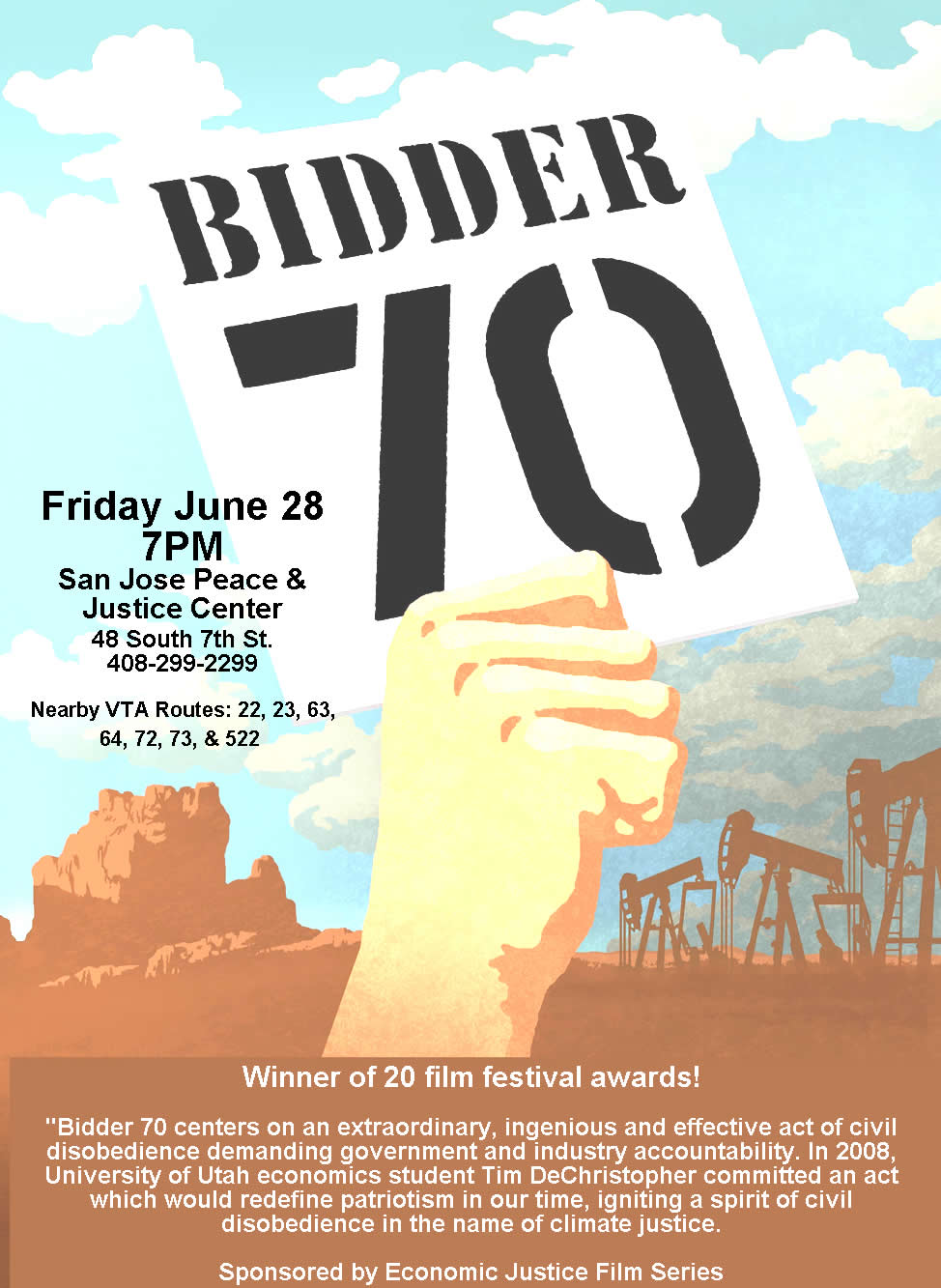
Director: Beth Gage & George Gage
Run Time: 73 min.
Call Number: QH77.3.C57 B53 2012
"Bidder 70 tells a uniquely American story. Only in the United
States would the president auction off protected wilderness to energy
and mining companies to help the government turn a profit. Only in the
U.S. would a college student show up to the auction and outbid the
companies, then be taken to court and ultimately thrown in federal
prison for falsifying his bids. That president was George W. Bush, of course. The wilderness was in Utah. And the college kid, Tim DeChristopher, proves a fascinating subject for Beth and George Gage's new documentary."
—Diana Clarke, The Village Voice
Director: Stephen Vittoria
Run Time: 120 min.
Call Number: HV8701.A28 L66 2013
"[T]he movie begins rather bravely with a montage of right-wing pundits who object to Abu-Jamal being described as a 'political prisoner' and want to see him executed. But it quickly takes a detour from the haters to the fans, lining up such famous backers as Alice Walker, Cornel West, Angela Davis and Peter Coyote . . . Mumia gradually becomes a persuasive attempt to celebrate the content of his character, not the violence that apparently led to his imprisonment. Indicting the 'police state' created by Philadelphia’s leaders during the late 1970s/early 1980s, Vittoria creates a context that suggests how easily innocents could be railroaded."
—John Hartl, The Seattle Times
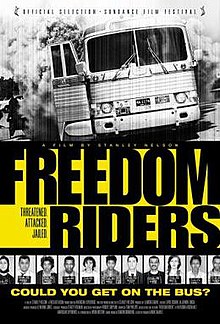
Director: Stanley Nelson
 Run Time: 120 min.
Call Number: E185.61 .F74 2011
"The filmmaker Stanley Nelson has a stunning accomplishment in 'Freedom Riders,'
a documentary that chronicles a crucial, devastating episode of the
civil rights movement, an episode whose gruesome visuals impinged on the
perception of American liberty around the world. Commemorating the 50th
anniversary of the freedom rides, the film . . . is a story of ennobled youth and noxious hatred, of decided courage and
inexplicable brutality. In May 1961 the Congress of Racial Equality
sought to challenge the segregation of interstate travel on public
transport and sent forth activists, both black and white, and many of
them students, on a bus journey through the South, where they were
received with violence that law enforcers refused to tame. . . . It is hard to imagine a feature film conveying the events with a more vivid sense of drama or suspense."
—Ginia Bellafante, New York Times
 Director: Jim Bruce