Director: Angela Sun
Run time: 57 min.
Call Number: TD427.P62 P53
"The film begins with a disturbing image of a dead bird being cut open, as plastic objects are removed from its stomach. This leads into a brief history of plastic, which (in contrast to natural materials) never really decomposes. Anyone who has visited a beach has encountered plastic residue, but viewers may not realize the extent of the problem. The centerpiece of the film is a journey that Sun takes to the Midway Atoll, best known as the site of a famous battle during World War II. The large island in the Pacific has become a massive garbage dump that Sun’s camera explores. The enormous amount of waste has proved deadly to the large population of albatrosses that are one of the island’s primary residents."
—Stephen Farber, Hollywood Reporter
Director: Andrew Rossi
Run time: 90 min.
Call number: LB2342 .I96 2014
"Is a college education worth it? Is the college model broken? Are online courses any good? Do state universities pimp their party reputations to attract out-of-state students? Are college presidents paid too much? Are adjunct professors paid too little? Can Cooper Union remain free?
These are just a few of the questions and topics raised in “Ivory Tower,” an earnest, articulate, and agenda-heavy documentary from CNN Films and writer-director Andrew Rossi (“Page One: Inside the New York Times”). They’re all worth discussing and with any luck the film will fire up conversations within academia and without."
—Ty Burr, Boston Globe
Director: Brian Knappenberger
Run Time: 105 min.
Call Number: QA76.2.S93 I58 2015
". . . director Brian Knappenberger's gripping, well-researched movie makes a compelling argument that U.S. authorities went way overboard in their zeal to make an example out of the brilliant Swartz, who got into trouble for downloading 2 million research documents from MIT . . . Swartz was not a guy who was stealing music or movies for his own profit, or exposing spy secrets to embarrass the government. He was on a mission to make public research accessible to anyone who might need it. That caper, in just about anyone's book, isn't worth 50 years in prison. (Needless to say, no government officials come forward to defend their actions.)"
—David Lewis, San Francisco Chronicle
Director: Göran Hugo Olsson
Run Time: 85 min.
Call Number: DT33 .F313 2004
". . . reflects the shifting focus of Swedish activist filmmakers during the mid-’70s, who grabbed their cameras and traveled to the front lines of African independence, observing firsthand the fall of apartheid and liberation of a people who’d been exploited by white Europeans for decades. . . . In searching for a mechanism to unify this incredible footage, which has gone largely unseen by the general public ever since, Olsson seized upon Fanon’s 1961 tract [The Wretched of the Earth], a controversial anarchist cookbook which analyzed the psychology of occupation and identified violent upheaval as the only means to overthrow colonialism — a system Fanon referred to as 'violence in its
natural state.'"
—Peter Debruge, Variety
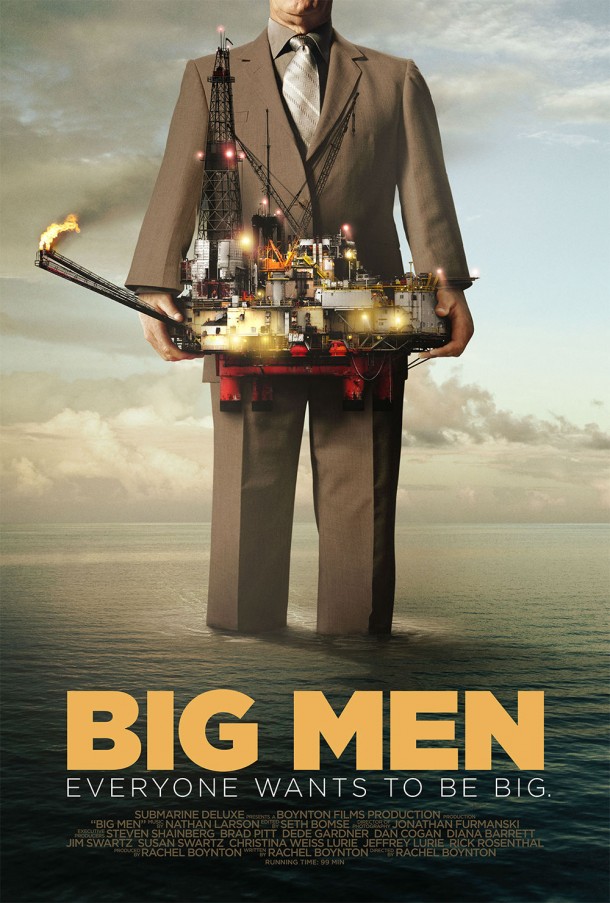
Title: Big Men
Director: Rachel Boynton
Call Number: HD9577.G42 B54 2015
"Not for nothing does 'Big Men,' Rachel Boynton’s astonishing documentary about the 2007 discovery of oil off the coast of Ghana, open with a quotation on greed from the economist Milton Friedman. Dropping us into a perfect storm of avarice, this cool and incisive snapshot of global capitalism at work is as remarkable for its access as for its refusal to judge. . . . Tagging neither heroes nor villains, Ms. Boynton wonders instead who
benefits from, and who is harmed by, the billions of dollars in play.
Should the enormous risks and staggering costs of getting to 'first oil'
guarantee its finder—in this case, a small Texas start-up called Kosmos Energy—a sweetheart deal from the Ghanaian government? The amiable chief
executive of Kosmos at the time, Jim Musselman, certainly hopes so;
eager to satisfy his corporate backers, and with Ms. Boynton’s camera in
tow, he schmoozes with West African royalty and glad-hands middlemen."
—Jeannette Catsoulis, New York Times
 Director: Angela Sun